Staia: Cosmic Guide
- 4.7
- Rating
- 10.00K
- Installs
- Free
- Price

 Analysis by App-foxy
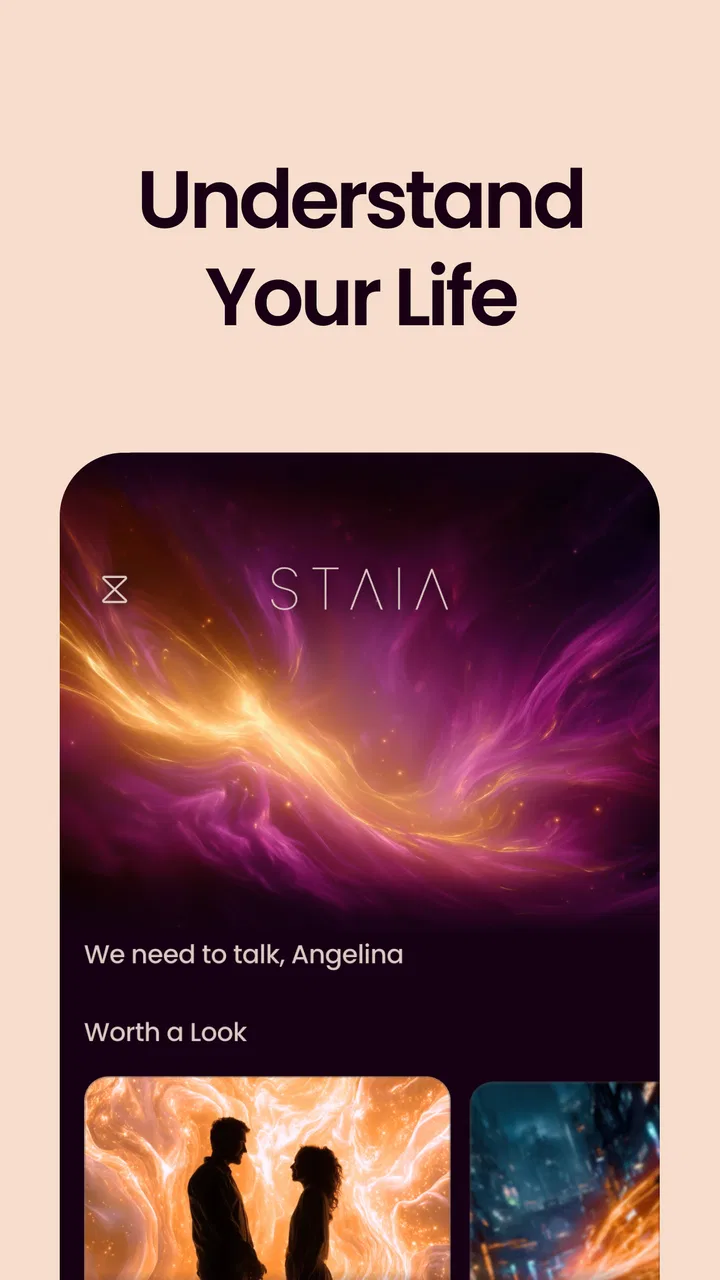
I approached Staia: Cosmic Guide as a lifestyle app for people who enjoy astrology and spirituality but may also care about how comfortably they can read, navigate, and use that kind of content in everyday situations. My overall impression is that it is easiest to appreciate as a reflective companion rather than as a tool for making important decisions. The experience is centered on a cosmic, spiritual theme, and that makes it appealing when you want a moment of personal interpretation without opening a much heavier platform.
Staia is free to install, with optional purchases ranging from $6.99 to $79.99 per item. It is made by MediaKey Solutions, carries an Everyone age rating, and runs on Android starting with version 7.0. The current release is 1.9.7. Those details make it approachable for a broad audience, although the presence of optional paid items means I would still look carefully at what is included before committing to anything.
How comfortably Staia supports different readers and situations
I look at comfort as more than readable text: it also means having enough time and calm to decide what a spiritual interpretation means to you. Staia is easiest to approach when I set my own pace, keep a reading separate from urgent decisions, and use the phone’s accessibility settings where needed. That makes it a more natural fit for some readers and situations than others.
You May Also Like

 AccuWeather: Weather Radar
AccuWeather Review: A Quick, Clear Forecast for Everyday Decisions
For everyday plans, the best forecast is the one you can understand quickly. AccuWeather makes rain timing, radar, and local conditions easy to act on, with a few trade-offs.

 Hill Climb Racing
Why Hill Climb Racing Still Turns Crashes Into One More Run
A tiny car, a bumpy hill and one more upgrade: Hill Climb Racing keeps resurfacing because its simple chaos makes every near-miss feel personal.

 AliExpress - Shopping App
AliExpress Makes Global Shopping Feel Personal, but Shoppers Bear the Risk
AliExpress turns a global marketplace into a pocket-sized discovery engine. Its reach is useful, its shopping loop compelling, and its trade-offs easy to miss.

 Lords Mobile: Kingdom Wars
Lords Mobile Is a Kingdom-Building Routine, Not a Quick Match
A case-by-case verdict on the building, battles, device demands, and social commitments that make Lords Mobile rewarding for some players and exhausting for others.

 PDF Scanner app - TapScanner
TapScanner Makes Paperwork Easier to Capture, Check, and Share
TapScanner makes scanning with a phone feel less like a rescue operation and more like a dependable step in getting work done. Its capture tools are useful, though not flawless.

 Block Blast!
 Shows How Much a Puzzle Game Can Leave Out
A quiet grid game shows why puzzle players increasingly value instant clarity, repeatable skill and low-pressure play—and where the genre still needs to catch up.
More From Our News Desk
View All News


Readability and navigation in a reflective app
The first thing I look for in an astrology app is whether the content feels easy to approach. Spiritual language can become vague very quickly, especially when screens mix symbolic ideas, decorative presentation, and longer explanations. Staia works best when I treat each reading as something to pause over rather than something to rush through. That slower rhythm suits the subject, but it also means the app is more comfortable for users who can give it their full attention.
For someone who reads on a small phone, the practical test is not simply whether text appears on the screen. It is whether the wording can be followed without losing the main point among cosmic terminology or visual emphasis. I would recommend increasing the phone’s text size if you normally need larger writing, then checking whether the layout remains comfortable before settling into regular use. That is a useful habit with any astrology service, because a beautiful presentation is not helpful if the actual interpretation becomes tiring to scan.
I also found that a predictable personal routine makes the app easier to use. Instead of opening it repeatedly and trying to absorb every available idea, I would choose one quiet moment, read one piece at a time, and note the parts that feel relevant. This approach reduces navigation fatigue and prevents the experience from turning into endless scrolling. It is a small but important distinction: Staia feels more manageable when I use it as a focused check-in, not as a feed that must be consumed from top to bottom.
The app’s store presence is relatively easy to understand at a glance: it is a free lifestyle download focused on astrology and spirituality, with a 4.7 average from around five thousand ratings and over ten thousand installs. I see that as a sign of genuine interest, but not as proof that every reader will find the presentation equally clear. Astrology is personal, and a high average cannot replace trying the reading style yourself.
Motor and sensory considerations
Apps in this category are often used one-handed, while lying down, during a commute, or in a dim room. That makes physical comfort part of the review. I would not choose Staia for a hurried moment when I need to tap quickly or move through several screens with precision. A calmer posture, a stable grip, and a little time make the experience less frustrating, particularly for anyone who finds repeated scrolling or small touch targets difficult.
One practical workflow is to use the app while seated with the phone supported rather than held continuously. That reduces hand strain and gives me more control when reading longer passages. It also helps users who experience tremor, limited dexterity, or fatigue, because the session can be broken into short visits instead of requiring one long interaction. The app is much more inviting when I adapt the setting around it rather than expecting it to solve every physical access issue by itself.
Sensory comfort matters too. Astrology and spirituality can be presented with strong visual themes, and some people enjoy that atmosphere while others find ornament distracting. I would keep the phone’s brightness at a comfortable level and avoid using the app in a dark room if the screen feels intense. If you are sensitive to motion, contrast, or busy visual composition, take a short test session before purchasing anything. The most useful reading is the one you can follow without visual fatigue.
People who rely on screen readers, magnification, switch access, voice control, or other device-level tools should test the specific screens they plan to use. The operating system can provide valuable assistance, but support is not always identical from one screen or control to another. I would not assume that a spiritual app’s decorative elements carry useful meaning for assistive technology. My advice is to begin with the free experience, identify whether the core text and controls are workable, and only then consider spending money.
Situational access: when Staia fits naturally
The strongest everyday use case for me is a short evening reset. After a busy day, I can open Staia, read a focused interpretation, and use it as a prompt to think about what actually happened rather than treating it as a fixed prediction. That makes the app useful even for someone who approaches astrology lightly. I might ask myself whether the reading helps me name a feeling, reconsider a conversation, or set a calmer intention for tomorrow. The value comes from reflection, not from handing over responsibility.
A second good setting is a quiet morning when I want a gentle starting point. I would read before checking a crowded stream of notifications, then choose one practical action for the day. This workflow is more inclusive than expecting constant attention, because it gives the user control over timing. Someone with variable energy can use it briefly, while someone who enjoys deeper reflection can stay longer. The important point is that the app does not need to become a daily obligation to be worthwhile.
It is less suitable in noisy public places or while multitasking. If you are walking, driving, caring for a child, or trying to communicate with someone, a spiritual reading should wait. The content asks for interpretation, and divided attention makes it easier to misunderstand a message or tap into an optional purchase accidentally. I would also avoid using it as a substitute for medical, financial, legal, or mental-health advice. Astrology can support personal reflection, but it should not carry decisions that require qualified guidance.
For households with different ages or abilities, the Everyone rating is reassuring as a broad content signal, but I would still introduce the app according to the person using it. A younger user may need help understanding the difference between symbolic guidance and factual advice. An older user may care more about text size, contrast, and avoiding unnecessary purchases. In both cases, a short shared setup is more useful than assuming the default experience will suit everyone.
Where it compares well with familiar alternatives
Compared with a general horoscope website, Staia has the advantage of feeling more personal and contained. I do not have to sort through unrelated articles, advertisements, or a large collection of competing interpretations before getting to the reflective part. That focused quality is valuable for users who become overwhelmed by busy pages or too many choices. On the other hand, a website may be better if you prefer browsing several viewpoints, searching for specific terms, or reading without installing an app.
Compared with a broad meditation app, Staia is more directly suited to symbolic self-reflection. A meditation service may offer clearer structure for breathing, sleep, or stress reduction, while this app is a better fit for someone who wants cosmic language and astrology as the starting point. I would choose the meditation alternative when I need a guided calming exercise with a defined beginning and end. I would choose Staia when I want a prompt that leaves more room for my own interpretation.
Compared with a detailed astrology platform, Staia may feel less intimidating for a newcomer. A specialist service can be preferable for users who want technical charts, extensive explanations, or a more analytical approach. Staia makes more sense for a casual user who wants an approachable lifestyle experience. That trade-off is important: simplicity can improve access, but it may not satisfy someone who expects a deep, highly customizable astrological workspace.
The optional purchase range also changes the comparison. A free starting point lowers the barrier to trying the app, but higher-priced items deserve deliberate consideration. I would never buy simply because a reading creates urgency or promises certainty. I would first ask whether the extra material offers a kind of reflection I will genuinely use, and whether the purchase remains comfortable within my budget. The most accessible choice is often to test the free experience slowly before paying for deeper content.
Remaining barriers and practical workarounds
The biggest barrier is not necessarily a missing button or a difficult menu; it is the ambiguity built into spiritual content. A reading can feel meaningful to one person and confusing to another. Users with cognitive disabilities, language-processing difficulties, or anxiety around uncertain messages may prefer plain, concrete explanations and clear boundaries. I would read one passage at a time, translate abstract wording into a simple question, and stop if the result increases worry rather than helping me reflect.
Another barrier is the possibility of financial pressure. The app is free, yet in-app items can cost from $6.99 to $79.99 each. That span is wide enough that families should use purchase controls and discuss spending expectations in advance. I would also avoid exploring paid areas when tired or emotionally vulnerable. A calm decision made later is more reliable than an impulsive purchase made immediately after a dramatic interpretation.
There is also a social barrier for people who do not want others to know they are using an astrology app. A quiet personal routine helps, but privacy can still depend on the phone’s notifications, shared device settings, and account habits. I would review notification behavior through the phone’s own controls and avoid leaving sensitive screens open in public. These are ordinary device precautions, but they matter more when an app touches personal beliefs or emotional concerns.
Users with older devices should pay attention to the Android requirement. Staia supports Android 7.0 and later, which covers a broad range of phones, but age alone does not guarantee a smooth experience. A device with limited storage, a worn battery, or a small display may make reading less comfortable. If your phone already struggles with scrolling or text-heavy apps, I would try Staia during a short session before building a routine around it.
For iPhone users, the sensible approach is equally simple: check the app’s current compatibility and then evaluate the actual reading experience with your own accessibility settings. I would not judge inclusion from the category or visual theme alone. What matters is whether the text, controls, and purchase flow work with the tools you personally depend on. That is especially true for voice navigation, zoom, larger text, and reduced visual stimulation.
My inclusive verdict
Staia earns its place as a gentle astrology and spirituality app for people who want a focused moment of reflection rather than a technical astrology course or a structured wellness program. I like its approachable purpose, its free entry point, and the way it can fit into a short morning or evening routine. The strongest experience comes from using it intentionally: one reading, one personal question, and no pressure to treat symbolic guidance as a command.
I would recommend it to curious beginners, casual astrology users, and anyone who enjoys reflective prompts but dislikes crowded information platforms. It may also work well for people who need flexible timing, since a session can be brief and self-directed. The app’s broad Everyone rating and its popularity, reflected in a 4.7 average across around five thousand ratings, make it an easy candidate to try, although personal comfort with the presentation still matters more than the score.
I would skip it if you need clinical guidance, evidence-based forecasting, a fully technical birth-chart workflow, or a meditation app with explicit exercises. I would also be cautious if abstract spiritual language tends to increase anxiety, or if optional purchases are difficult to resist. In those situations, a more structured or transparent alternative is likely to serve you better.
My final advice is to begin with the free version, adjust your phone for comfortable reading, use it in a quiet setting, and treat every interpretation as a prompt rather than a verdict. MediaKey Solutions has positioned this as a lifestyle experience, and that is exactly where I think it works best. Staia is most inclusive when the user remains in control of the pace, the meaning, and the money spent.
FAQs for Staia: Cosmic Guide
01What is Staia: Cosmic Guide and what can I use it for?
Staia: Cosmic Guide is an astrology-focused mobile app designed to help users explore personalized cosmic insights, birth-chart information, horoscope-style guidance, and related astrological themes. It is mainly intended for reflection, entertainment, and self-discovery rather than scientific analysis. The app may be useful if you enjoy learning about zodiac signs, planetary influences, compatibility, or daily guidance in a convenient, personalized format.
02Does Staia: Cosmic Guide require my personal information to work?
To provide personalized astrological content, Staia: Cosmic Guide may ask for details such as your name, birth date, birth time, and birthplace. Accurate birth information can improve the quality of a natal chart, especially when the app calculates rising signs or house placements. Before creating an account or submitting sensitive details, review the app’s privacy policy and check how your information is stored, used, and shared.
03Is Staia: Cosmic Guide free to download and use?
The app may be available to download for free, but some features or detailed readings can require in-app purchases or a subscription. Users should carefully review the pricing page, trial conditions, renewal terms, and cancellation instructions before activating premium access. If a free trial is offered, remember that it may automatically convert into a paid subscription unless it is canceled within the required period.
04Can I rely on Staia: Cosmic Guide for important life decisions?
Staia: Cosmic Guide should be treated as a tool for entertainment, personal reflection, and exploring astrology—not as professional advice. Its interpretations are based on astrological traditions and should not replace guidance from qualified medical, financial, legal, or mental-health professionals. Avoid using horoscope predictions or compatibility readings as the sole basis for serious decisions involving health, relationships, money, or safety.
05Is Staia: Cosmic Guide suitable for beginners in astrology?
Staia: Cosmic Guide can be approachable for beginners because it presents astrological concepts in a mobile-friendly format and may explain signs, planets, charts, and cosmic influences through personalized content. However, the amount of detail and terminology can vary between features. New users should take time to read explanations carefully, enter accurate birth information, and remember that interpretations can differ across astrological systems.
Pros
- Personalized cosmic guidance makes readings feel more relevant.
- Clean
- calming design supports a relaxing astrology experience.
- Useful for reflecting on moods
- goals
- and daily decisions.
- Regular updates can keep the content feeling fresh.
- Simple navigation makes the app approachable for beginners.
Cons
- Some features may require a paid subscription or in-app purchase.
- Astrology guidance is interpretive and should not replace expert advice.
- Personalization depends on entering accurate birth information.
- Notifications may become repetitive for users checking less often.
- The app may feel limited for users wanting detailed chart analysis.

Staia: Cosmic Guide
Gallery